
FAQs
It’s normal to have a lot of questions about Acupuncture treatments. If you have any further questions, please don’t hesitate to email me.
What are the benefits of Acupuncture?
Acupuncture has the incredible ability to treat and promote healing for every condition. While we cannot always ‘cure’ structural or chronic conditions, acupuncture can provide significant relief and improve quality of life.
Acupuncture is particularly effective for:
- musculoskeletal conditions
- chronic and acute pain and injury
- stress and mental health
- headaches and migraines
- neurological conditions
- immune and inflammatory conditionss
- gynaecological conditions
- post-concussion syndromes
- fatigue and sleep issues
- nausea and digestive disorders
- fertility & pregnancy
- general wellbeing and vitality
Don’t hesitate to email if you have questions regarding your specific condition.
Does Acupuncture hurt?
Generally, acupuncture needles do not hurt. The fine, single-use sterile needles are inserted into acupuncture points, which are dime-sized spaces between muscles, ligaments, tendons and vessels. You may feel sensations as the needle reaches the accurate depth. This may be be a tingling, warmth, or dull aching sensation. Sensation is an indicator that the treatment is working.
Occasionally, you may feel a sharp sensation. This may mean that the area is especially active and the needle produced a strong result. If the sensation does not subside in 5 seconds, I will adjust or remove the needle.
Everybody has a unique system and response to Acupuncture. How many needles are used and what needle technique and depth is used is adjusted to your condition and sensitivity. As we work together, we will develop a treatment protocol that is adjusted overtime as your system responds to the treatment.
Can I have a needle-free Acupuncture session?
Yes! Absolutely.
If needles are not your thing, or you would like some time to warm up to needles, we can adjust your treatment according to your needs and comfort.
Instead of needles, I will use acupressure, electro-moxibustion, and cupping.
I am very experienced in acupressure, a form of manual therapy that uses the acupuncture system for systemic, full body release. While it may feel similar to a massage, acupressure uses osteopathic manipulation and targets acu-points using pressure.
I also use electro-moxibustion in my practice. This is an infrared pen that warms the acu-points and stimulates circulation in the entire system. This can be used with or without needles.
How frequently do I need Acupuncture?
The frequency of acupuncture treatments depends on your health and the condition being treated. Together, we will develop a treatment plan that works for you.
Like Western medication, acupuncture medicine is delivered in doses. While one acupuncture treatment may produce immediate results, you may require further ‘doses’ to maintain the effect over a longer period of time. Frequency of treatment is adjusted based on how your body responds.
Generally, there are different phases of treatment. This is a general guideline that can be adjusted to your needs.
Initial phase:
- For acute symptoms, you may benefit from 1 – 2 sessions per week
- This phase is about relieving discomfort and preventing further injury
- If you have not had many acupuncture treatments in the past, it may take a few sessions to ‘feel’ the results as your body adjusts to the treatment.
Maintenance phase:
- Once the symptoms improve, you may benefit from a session every 2 weeks or a month
- Maintenance is beneficial to maintain health benefits, prevent symptoms from returning, and continue to build your vitality
- There may be other underlying issues that benefit from treatment after the acute issue is resolved
Chronic conditions:
- Chronic conditions (longer that 6 months) may require more long-term treatment to address the systemic complexity
- The longer the condition has existed, the longer it may take to resolve
- Ask me about treatment plans for chronic conditions. We can work together to ensure regular treatment is affordable and accessible to you
How does Acupuncture work?
Acupuncture promotes the flow of Qi within the body which stimulates and directs the body to heal itself.
On a local level, acupuncture promotes circulation, detoxification, oxygenation and cell regeneration.
On a systemic level, acupuncture works on several levels:
- Nerves: Acupuncture releases the nervous system, balancing the electrical signals in our nerves and allowing them to release.
- Brain: The needles also activate areas in the brain, reminding the brain where to send important chemicals to promote healing.
- Body-Brain: By fostering the connection between the local area and the brain, acupuncture resets the body-brain connection, reinforcing connections that may have been disrupted.
- Channels: Acupuncture stimulates the channel system and allows the channels to flow smoothly. Channels are where Qi flows between tissues of the body. It is the ‘circulatory system of energy’ of the body.
What is Qi?
Qi is a word that describes the movement of energy.
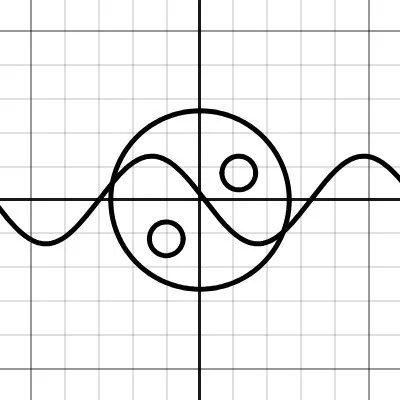
While we do not have a word in English that fully describes ‘Qi’, we can rely on the laws of physics to understand what Qi is and how it works. In physics, energy transformation and electromagnetic movement are both examples of Qi. In mathematics, this transformation can be represented by a sine wave. A sine wave is a simplified version of the yin yang. In acupuncture, we use the laws of Qi and physics to direct Qi for the best medical results.
 BARA ACU