
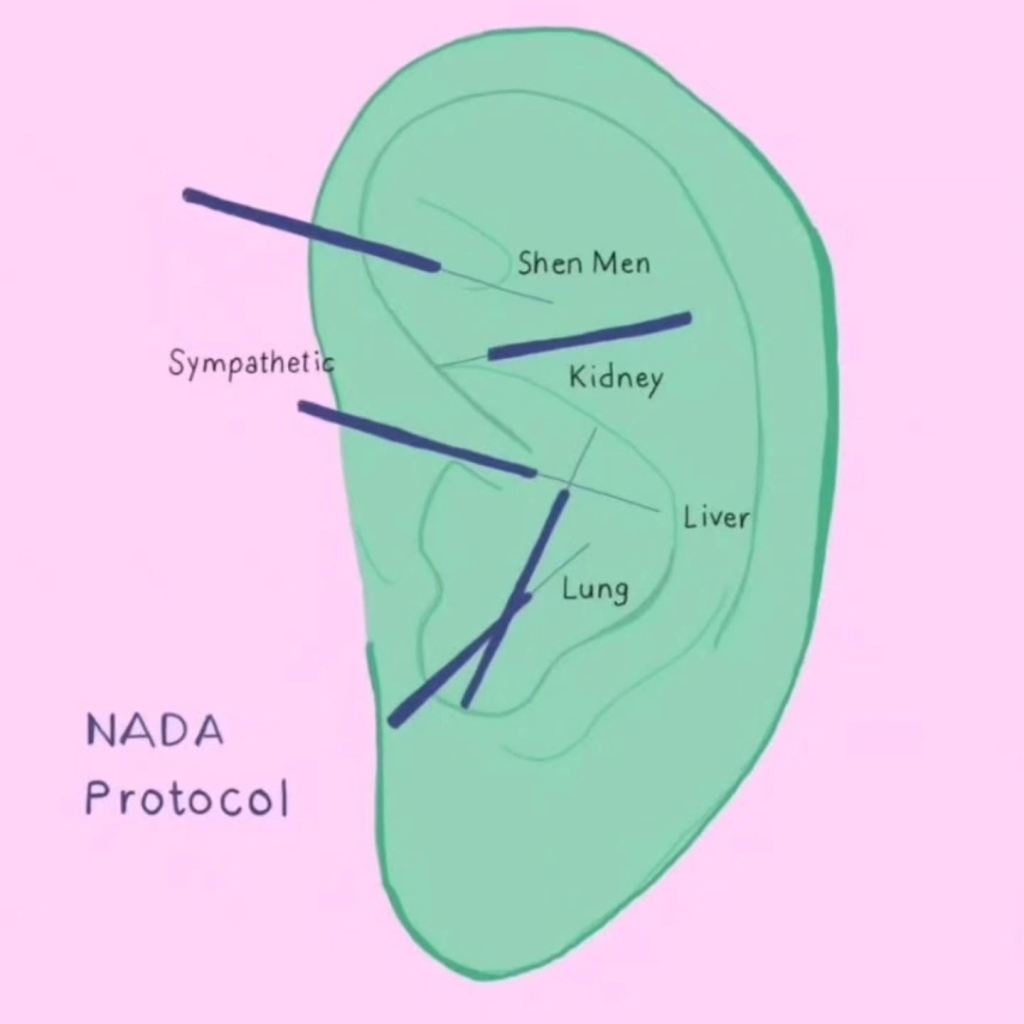
The NADA (National Acupuncture Detoxification Association) Protocol is a remarkably effective treatment that is used around the world to treat many populations receiving healthcare. While it was developed to treat addictions, it is now used as an effective treatment for mental health issues such as anxiety, depression, PTSD, addictions, trauma, and withdrawal symptoms from substances such as cigarettes and opiates. It is also used to treat chronic pain, insomnia, cancer treatment related symptoms, nervous system dysregulation, emergency response recovery for first responders and more.
The NADA Protocol was developed at the Lincoln Center in Harlem in the 1970s. Inspired by the research of neuro-surgeon H.L. Wen that demonstrated the effects of the ear lung point in relieving acute opium withdrawal symptoms, the Lincoln Detox group developed the NADA Protocol through a community process of experimentation and feedback. Frontline staff members such as counselors, nurses and peer recovery workers illegally administered the NADA protocol and with the significant benefit the clients experienced from the treatment, advocates formed the NADA organization in 1985 to facilitate it’s growth and legitimacy. This led to the development of Acupuncture Detoxification Specialists (ADSes) who were able to provide the NADA Protocol if they worked in a setting that also provided comprehensive addiction treatment services and were supervised by a licensed acupuncturist or physician with acupuncture training. Gradually the practice spread and now the NADA organization estimates that some twenty-five thousand people have been trained in this method. Clinical, anecdotal and evidence-based experience indicates that the NADA model of care improves treatment and health outcomes. The model includes: (1) integration with other interventions; (2) barrier-free; (3) regular treatments; (4) a communal setting; and (5) local personnel and/or cross-trained health providers offer the therapy.
Acupuncture Without Borders is a non-profit outreach Acupuncture organization that uses the NADA Protocol points to provide disaster relief, fostering recovery, and promoting resilience in communities affected by natural disasters, human conflict, environmental devastation, poverty and social injustice. Their mission is to reduce trauma experienced by individuals and communities affected by war, conflict, natural disasters, and humanitarian crises by collaborating with local community-based organizations and providing treatment to those impacted by traumatic events, including survivors, first responders, emergency personal and care providers.
Battlefield Acupuncture (BFA) is another auricular acupuncture technique that is used for immediate pain relief and stress and trauma-related symptoms. It was developed by Dr. Richard Niemtzow as a rapid and effective way to manage pain, particularly in austere environments, and is commonly used by the military. Battlefield Acupuncture uses small semi-permanent needles which are inserted into five points in the ear. The needles remain for 2 – 4 days, then fall out on their own.
There is extensive research and clinical evidence showing the medical benefits of auricular acupuncture. It is a simple, relatively painless treatment that stimulates the nervous system to enter a parasympathetic state. The NADA Protocol and Battlefield Acupuncture are standardized treatments to target pain and trauma, but advanced auricular acupuncture techniques can also be tailored to your specific condition through a Traditional Chinese Medicine analysis. In my clinical training, I trained in several auricular acupuncture techniques to treat conditions such as herniated discs, migraines, chemotherapy side effects, and neurological conditions. As a microcosm of the macrocosm, auricular acupuncture has the ability to effect significant shifts in the entire body.
Learn more:
 BARA ACU
Leave a comment