
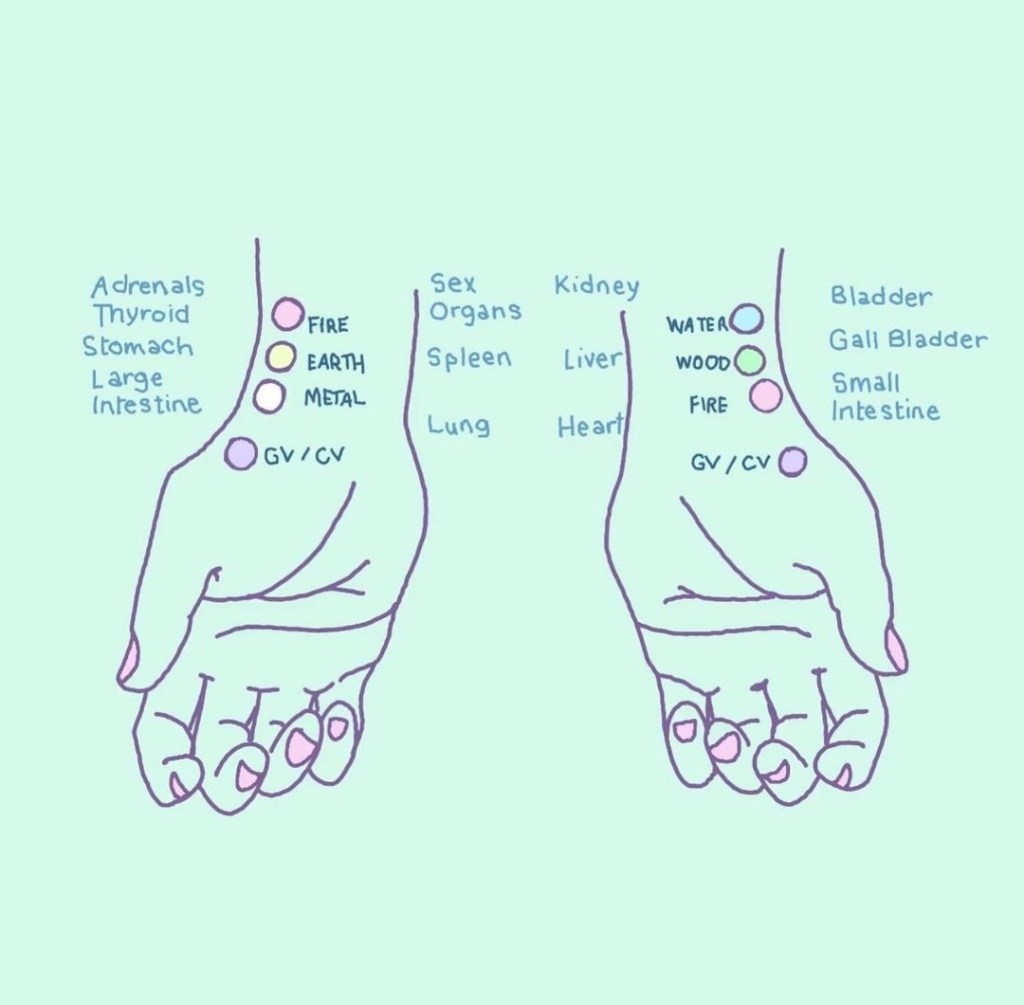
In Chinese Medicine, reading the pulse is key to diagnosis. The pulse gives insight into the organ system and their associated element according to five element theory. The five elements are associated with the organ systems, describing the nature of movement of Qi, blood, and body fluids. Five element theory emphasizes the mutual interaction of the organ systems through comparison to the fundamental elements of nature and the rotation of the elements under an interactive system. Five element theory definitions of organ systems align with Western definitions of organ function and give insight into the physiological process of mutual influence.
For instance, the liver is associated with wood, which is characterized by growth, ambition, and vitality. Physiologically speaking, the liver supplies energy from glucose, fatty acids, and amino acids to the whole body, as well as converts extra energy to glycogen storage, hormones and proteins.
The heart, of the fire element, directs the circulation of blood, oxygen, nutrients, and waste through the whole body, adjusting our pulse as necessary to remain in homeostasis and maintain our spark of life.
The pancreas and spleen of the earth element aid digestion and produce insulin, helping break down material and support cells to absorb glucose that supplies the body, much like the earthy process of composting.
The lung, of the metal element, exchanges carbon dioxide gas with oxygen and acts as the “lid” of the body. And of course, the watery kidneys filter water and the body’s waste producing urine.
The pulse is an expression of each organ system. By feeling the pulse, a practitioner is able to read the nature of the physiological function of the associated organ. Whether in excess or deficiency, the physiological process of each organ system is characterized and described by their respective element, which gives insight into how to treat the condition effectively. ✨
 BARA ACU
Leave a comment