
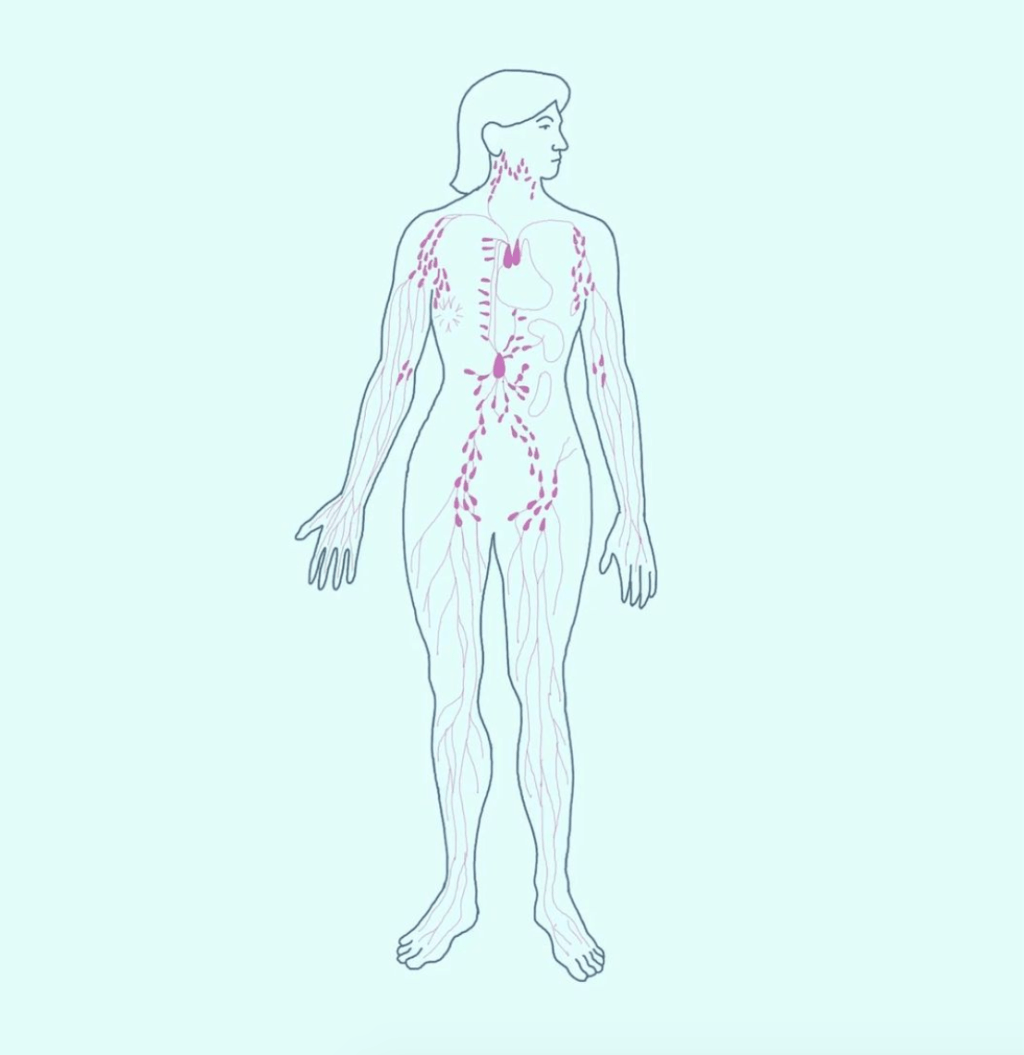
The lymphatic system is a subsystem of the circulatory system in the body that consists of a complex network of vessels, tissues, and organs. The lymphatic system helps maintain fluid balance in the body by collecting excess fluid and particulate matter from tissues and depositing them in the bloodstream. It also helps defend the body against infection by supplying disease-fighting cells called lymphocytes.
The lymphatic system can be thought of as a drainage system needed because, as blood circulates through the body, blood plasma leaks into tissues through the thin walls of the capillaries. The portion of blood plasma that escapes is called interstitial or extracellular fluid, and it contains oxygen, glucose, amino acids, and other nutrients needed by tissue cells. Although most of this fluid seeps immediately back into the bloodstream, a percentage of it, along with the particulate matter, is left behind. The lymphatic system removes this fluid and these materials from tissues, returning them via the lymphatic vessels to the bloodstream, and thus prevents a fluid imbalance.
 BARA ACU